
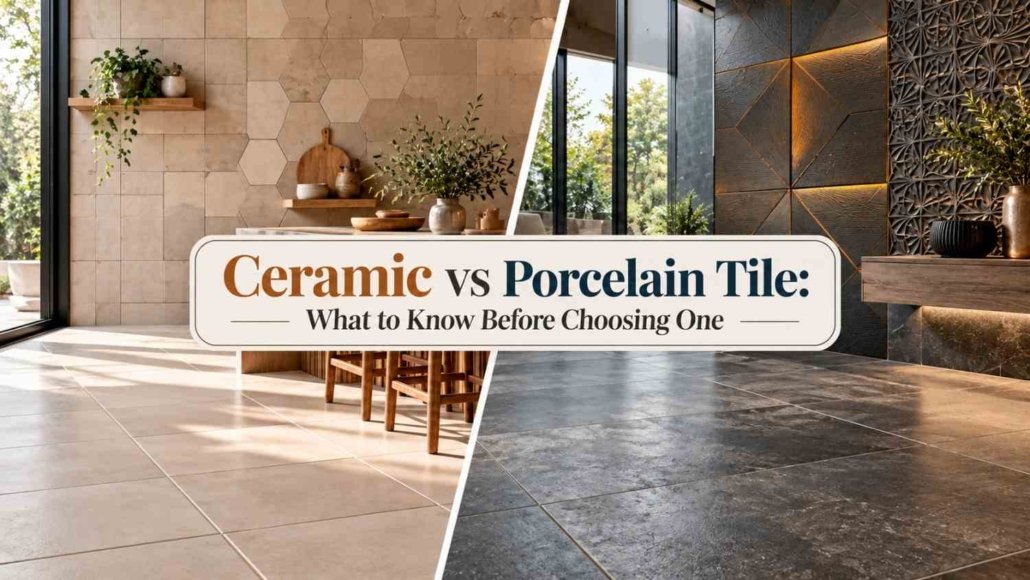
Choosing the right tile involves more than finding a color or pattern you like. The material you select can affect durability, moisture resistance, maintenance, installation, and how well the tile performs in a particular space. Two of the most popular choices are ceramic and porcelain tile.
While porcelain is technically a type of ceramic tile, the two are manufactured differently and can have different performance characteristics. Understanding the differences between ceramic vs porcelain tile can help you make a more informed choice for your kitchen, bathroom, flooring, backsplash, or commercial project.
What Is the Difference Between Ceramic and Porcelain Tile?
The primary difference between ceramic and porcelain tile comes down to density and water absorption.
Porcelain tile is manufactured to have a water absorption rate of 0.5% or less according to the applicable ANSI standard. Its dense composition makes it highly resistant to moisture and suitable for a variety of demanding applications.
Ceramic tile is a broader category with a wider range of water absorption rates and performance characteristics. It is available in numerous colors, shapes, patterns, finishes, and decorative styles, making it a popular choice for walls, backsplashes, and many residential applications.
Although porcelain is generally denser, that does not automatically make it the right choice for every project. The tile’s specific specifications, intended use, and installation requirements should always be considered.
Ceramic Tile: What You Should Know
Ceramic tile is made from clay and other natural materials that are shaped and fired at high temperatures. It can be glazed or unglazed and is available in an extensive range of designs.
One of its biggest advantages is design versatility. Ceramic tile can feature everything from simple neutral colors to decorative patterns, handcrafted appearances, mosaics, and specialty finishes.
Ceramic tile can be suitable for applications such as kitchen backsplashes, bathroom walls, decorative walls, properly rated shower walls, interior floors, accent areas, and feature walls.
For homeowners who want a particular color, shape, pattern, or decorative finish, ceramic provides plenty of design possibilities. Its broad selection makes it useful for creating both traditional and contemporary interiors.
Porcelain Tile: What You Should Know
Porcelain tile is a denser form of ceramic tile manufactured to meet the low water absorption requirement associated with porcelain tile.
Its low porosity makes porcelain particularly useful in locations where moisture resistance and durability are important. It is available in a wide variety of colors, patterns, textures, sizes, and finishes, including products designed to resemble natural materials such as wood and stone.
Porcelain can be considered for residential flooring, kitchens, bathrooms, high-traffic areas, commercial interiors, wood-look flooring, large-format installations, and certain exterior applications.
However, not every porcelain tile is appropriate for every location. Always check the manufacturer’s recommendations before selecting a product for an outdoor area, wet location, or high-traffic floor.
Which Is Better for Bathrooms?
Both ceramic and porcelain can work well in bathrooms when the selected product is appropriate for the application.
Porcelain’s low water absorption makes it a popular choice for bathroom floors and other areas exposed to moisture. Ceramic tile can also work well for bathroom walls, backsplashes, and other suitable applications.
When selecting bathroom tile, consider water absorption, slip resistance, floor or wall ratings, surface texture, cleaning requirements, tile size, and installation requirements.
It is also important to remember that tile alone does not waterproof a shower. Proper waterproofing, substrate preparation, installation materials, grout, and workmanship are all important parts of a successful bathroom installation.
Ceramic vs Porcelain Tile for Kitchens
Kitchens often benefit from different tile characteristics depending on where the tile will be installed.
For kitchen floors, porcelain may be worth considering when the space experiences heavy foot traffic, frequent spills, or demanding everyday use. Its low water absorption can also be useful in an area where moisture and spills are common.
For a backsplash, ceramic can be an excellent option because of its broad range of colors, shapes, decorative patterns, and finishes. A decorative ceramic backsplash can add visual interest without requiring the same performance characteristics as a heavily used floor.
Is Ceramic or Porcelain Easier to Install?
Ceramic is generally easier to cut because it is typically less dense than porcelain.
Porcelain’s density and hardness can require specialized cutting equipment and more experience, particularly for large-format or complex installations.
Installation also depends on tile size, thickness, substrate conditions, layout, and the installation system being used. Following the manufacturer’s installation instructions and working with an experienced tile professional can help ensure the finished installation performs properly.
How to Choose Between Ceramic and Porcelain Tile
Rather than asking which material is universally better, consider the specific requirements of your project.
Start by identifying where the tile will be installed. A backsplash, bathroom floor, commercial floor, and outdoor area can have very different performance requirements.
Next, consider moisture exposure. Kitchens, bathrooms, showers, and exterior areas require careful attention to water absorption and the manufacturer’s recommended applications.
You should also consider traffic levels. A busy entryway or commercial floor may require a product specifically rated for heavier use, while a decorative wall may have very different requirements.
Appearance is another important consideration. Think about the color, pattern, texture, finish, shape, size, and grout layout you want. Ceramic and porcelain are both available in a wide range of styles, so performance does not necessarily mean compromising on design.
Finally, review the manufacturer’s product specifications before making a decision. The recommended application, performance ratings, maintenance requirements, and installation instructions can tell you much more about whether a particular tile is suitable than the word ceramic or porcelain alone.
Explore Ceramic and Porcelain Tile at The Tile District
The right tile should balance appearance with the practical requirements of your space. Ceramic can provide extensive design flexibility, while porcelain offers very low water absorption and a dense construction that can be beneficial for many demanding applications.
At The Tile District, homeowners, designers, architects, builders, and contractors can explore a wide selection of ceramic and porcelain tile along with mosaics, stone, hand-painted tile, and other hard-surface materials.
Whether you’re updating a kitchen backsplash, designing a bathroom, replacing flooring, or working on a larger residential or commercial project, exploring different materials and product specifications can help you find a tile that fits both your design vision and functional needs.
Visit The Tile District to explore tile collections and find the right option for your next project.
Frequently Asked Questions
Can porcelain tile be used outdoors?
Some porcelain tiles are suitable for exterior applications, but not all porcelain products are designed for outdoor use. Check the manufacturer’s specifications for exterior suitability, water absorption, slip resistance, and climate requirements before installation.
Can ceramic and porcelain tile be used together?
Yes. Ceramic and porcelain tile can be combined in the same project when their colors, sizes, thicknesses, finishes, and installation requirements work together. Using different materials can also create visual contrast between floors, walls, backsplashes, and accent areas.
Does porcelain tile require special maintenance?
Porcelain is generally straightforward to maintain. Regular cleaning and prompt removal of spills are usually sufficient, but always follow the manufacturer’s care recommendations for the specific tile and finish.
Should tile selection be based only on price?
No. Consider the tile’s intended application, durability, water absorption, appearance, installation requirements, maintenance, and overall project cost. Comparing the complete cost and expected performance can help you make a more practical choice for your space.


Leave a Reply
Want to join the discussion?Feel free to contribute!